
Curcumin vs Turmeric Extract: Which One You're Actually Taking
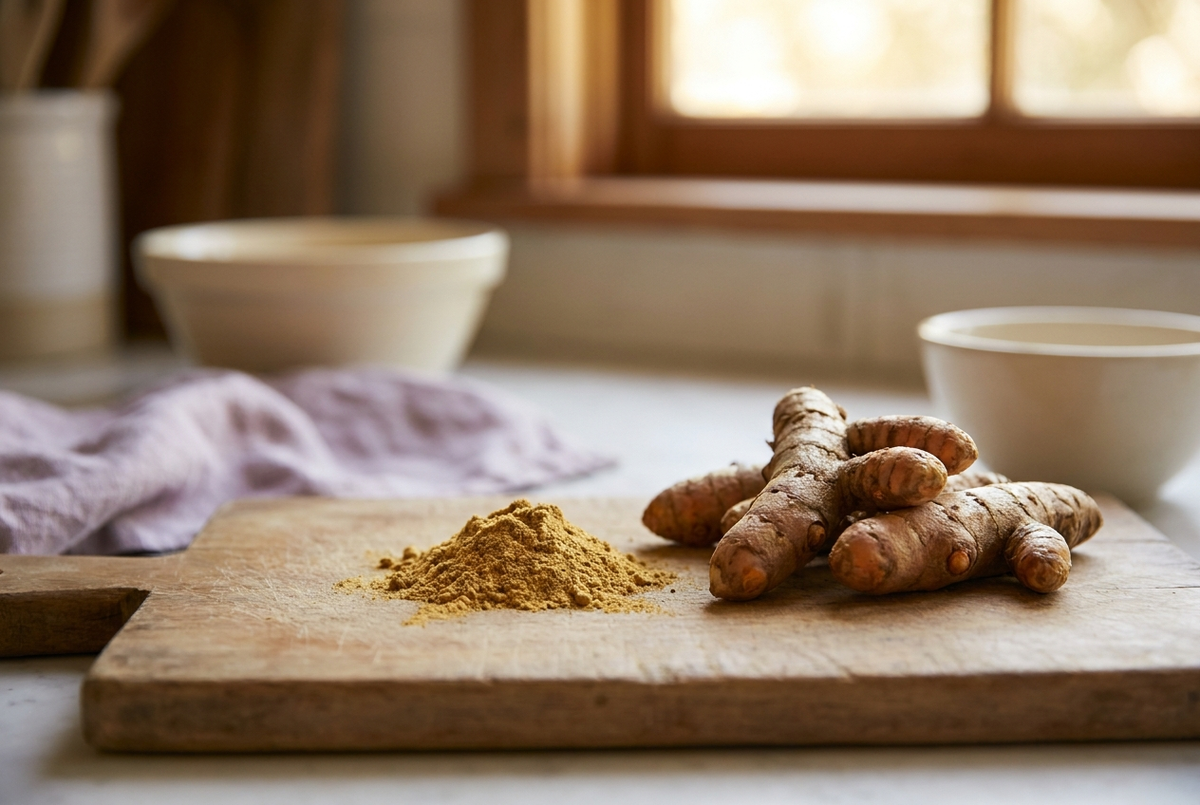
Turmeric and curcumin are often used interchangeably in supplement marketing, which creates genuine confusion about what is actually in a product. The distinction matters because the two are not the same thing, and the difference significantly affects potency, absorption, and what you can reasonably expect from a supplement.
Turmeric: The Plant
Turmeric (Curcuma longa) is a flowering plant related to ginger. The ground spice comes from the plant's rhizomes (underground stem) and is the yellow-orange powder used in curry and other dishes. Turmeric root contains hundreds of compounds including essential oils, polysaccharides, proteins, and a group of polyphenols called curcuminoids.
The curcuminoid content of raw turmeric root is approximately 2 to 5% by weight, depending on the variety and growing conditions. In the culinary spice, the curcuminoid content is in a similar range.
Curcumin: The Active Compound
Curcumin is the primary curcuminoid in turmeric and the compound responsible for most of the anti-inflammatory, antioxidant, and biological effects studied in research. The curcuminoid group also includes demethoxycurcumin and bisdemethoxycurcumin, which are present in smaller amounts and have some biological activity, but curcumin is the predominant and most studied component.
When researchers study turmeric's health effects, they are studying curcumin specifically, usually in the form of a concentrated extract standardized to a high curcuminoid percentage.
What Standardized Turmeric Extract Means
A turmeric extract standardized to 95% curcuminoids is a concentrated form of turmeric where most of the other plant material has been removed, leaving primarily the curcuminoid fraction. This means that 500mg of 95% standardized extract contains approximately 475mg of curcuminoids, compared to 500mg of raw turmeric powder containing perhaps 10 to 25mg of curcuminoids.
This concentration difference is not trivial. Clinical research on curcumin uses doses of curcuminoids that would require consuming impractical quantities of raw turmeric or low-concentration extracts to achieve. A supplement that lists turmeric root at 500mg without any standardization information may contain minimal curcuminoids. A supplement that lists 95% curcumin extract at 500mg contains a meaningful, research-aligned amount.
The Bioavailability Layer
Even with concentrated curcuminoids, the second problem is bioavailability. Curcumin is poorly absorbed from the digestive tract in its standard form. It is rapidly metabolized and excreted, meaning little of what is consumed reaches the bloodstream in concentrations that produce the effects seen in cell and animal studies.
Three primary approaches address this. BioPerine (piperine from black pepper) inhibits the enzymes that metabolize curcumin, increasing bioavailability by up to 2,000% in research. Phospholipid complexes like Meriva bind curcumin to phosphatidylcholine, improving absorption and creating a depot effect in tissues. Liposomal curcumin encapsulates the compound in phospholipid vesicles that protect it from digestive breakdown. SLCP (solid lipid curcumin particle) technology uses a lipid matrix to improve absorption.
Each of these approaches dramatically outperforms uncombined curcumin, which means that a lower-dose enhanced formula will often deliver more curcumin to tissue than a higher-dose standard formula without enhancement.
What to Look for on the Label
Several things identify a curcumin supplement that is likely to work. First, it should specify the curcuminoid content as a percentage (look for 95% curcuminoids or standardized extract). Products that list only turmeric root powder without standardization may contain very little active curcumin. Second, it should include a bioavailability enhancer. BioPerine is the most common and well-studied. Third, the dose of standardized extract should align with research (typically 500mg to 1,000mg of 95% curcuminoid extract per serving). Fourth, third-party testing for potency ensures the label reflects what is actually in the capsule.
Peremis Turmeric with BioPerine uses 95% curcuminoid extract at a researched dose with BioPerine for dramatically improved absorption, cGMP certified and third-party tested. It is designed around what the clinical research actually uses rather than the marketing language that surrounds most turmeric products.
Is Whole Turmeric Ever Better?
There is a reasonable argument that whole turmeric, consumed in food regularly over time, delivers compounds not present in isolated curcumin that may contribute to the benefits attributed to turmeric in population and traditional medicine contexts. The essential oils and other phytonutrients in turmeric have some independent biological activity. Cooking with turmeric alongside black pepper is a rational complement to supplementation.
For acute anti-inflammatory and pain support at research-comparable doses, however, standardized extract with a bioavailability enhancer significantly outperforms culinary turmeric at any practical consumption amount.
Frequently Asked Questions
Is turmeric the same as curcumin?
No. Turmeric is the plant, and curcumin is the primary active compound in turmeric, making up about 2 to 5% of raw turmeric by weight. A turmeric supplement and a curcumin supplement may or may not be equivalent, depending on the curcuminoid content and standardization of the turmeric product.
Why is curcumin extract better than turmeric powder?
Curcumin extract standardized to 95% curcuminoids delivers a far higher concentration of active compound per capsule. To get 500mg of curcuminoids from raw turmeric powder, you would need 10,000 to 25,000mg of the powder, which is not practical in supplement form. Extract allows therapeutic doses in a reasonable serving size.
Does eating turmeric with food provide health benefits?
Yes, at the level of flavoring and culinary use. Culinary turmeric with black pepper over time may provide modest anti-inflammatory and antioxidant benefits, consistent with population data from cultures that consume it regularly. It does not deliver the doses used in clinical trials for specific conditions. Both can coexist: regular culinary use and targeted supplementation are complementary.
Can you take too much curcumin?
Curcumin at typical supplement doses (500mg to 2,000mg curcuminoid extract daily) has a strong safety profile based on multiple clinical trials. Very high doses (above 8,000mg daily) have been associated with digestive discomfort in a minority of users. People on blood-thinning medications or immunosuppressants should consult their healthcare provider before taking curcumin.
This content is for informational purposes only. These statements have not been evaluated by the FDA. Consult your healthcare provider before starting any supplement.