
Phosphatidylserine Benefits: What It Does and Who It Is For
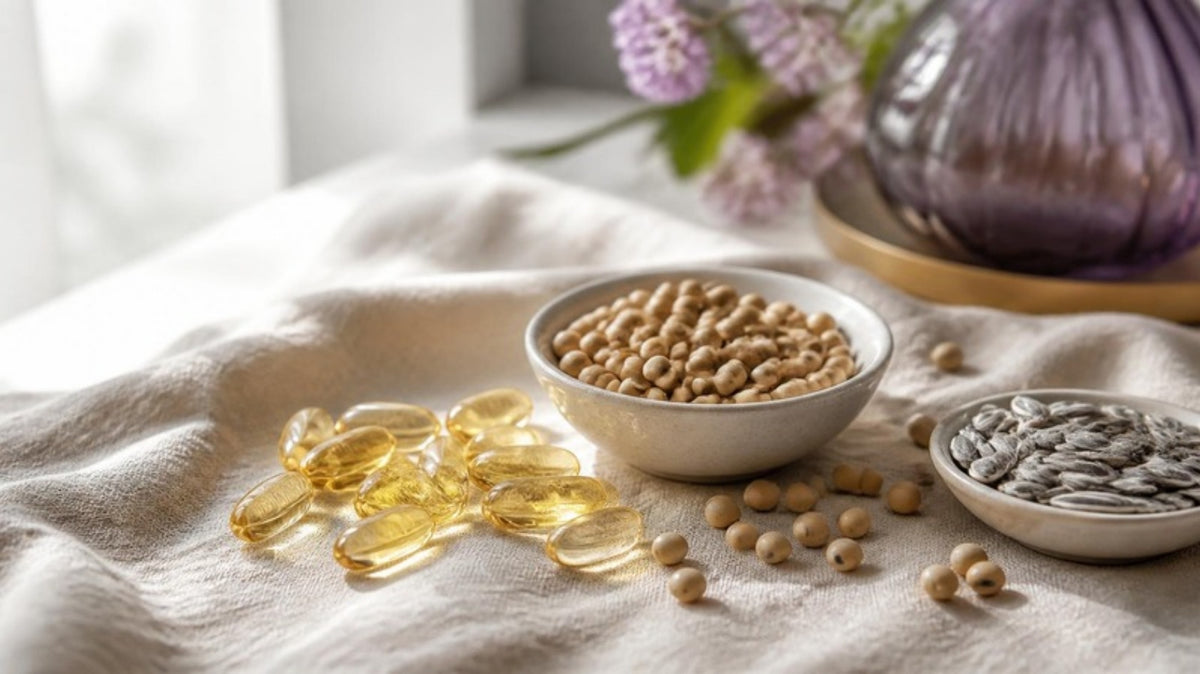
Phosphatidylserine has an unusual place in the supplement world. It has been studied in humans for more than thirty years and is one of the few brain ingredients with a large placebo controlled trial behind it, yet the modern evidence is thinner and more mixed than most product pages admit. This guide tries to be as straight about the null results as the positive ones.
Key takeaways
- What it is: a fat like molecule in every cell membrane, concentrated in brain tissue. Modern supplements are made from soy or sunflower, not cow brain.
- Best evidence: a six month trial in 78 older adults found better delayed word recall at 100 and 300 mg per day, but no difference from placebo on everyday memory or mood.
- Null results: a 12 week trial at 300 and 600 mg found no benefit, and a 6 week trial at 200 mg in healthy adults found no cognitive effect.
- Dose in trials: 100 to 300 mg per day, usually split across meals.
- Safety: no serious adverse effects in trials; possible small effects on blood pressure and a theoretical bleeding risk.
What phosphatidylserine is
Phosphatidylserine, often shortened to PS, is a phospholipid, one of the fatty building blocks that make up the membrane of every cell. It is especially abundant in the brain, where it helps membranes stay flexible and plays a part in how neurons signal, survive and communicate. Your body synthesizes it, and you also take in small amounts from food.
Early supplements and studies used PS extracted from cow brain. That stopped in the 1990s over prion disease concerns, and the PS sold today comes from soy lecithin or from marine sources that also carry omega 3 fats. According to the Alzheimer's Drug Discovery Foundation's Cognitive Vitality review, it is still unclear whether swallowing PS raises PS levels in the brain, because phospholipids may be broken down in the gut first.
What the research shows
The older bovine studies
The largest PS trial ever run, by Cenacchi and colleagues in 1993, gave nearly 500 older adults with cognitive decline 300 mg per day of bovine PS or placebo for six months and reported improvements in cognition and in apathy and withdrawal, with no change in activities of daily living. Smaller trials from the same era reported slight, short lived benefits. The Cognitive Vitality review's assessment is blunt: those benefits "have not been confirmed in larger trials," and the product used no longer exists.
The soy trials in older adults
The most informative modern study is a 2010 Japanese randomized, double blind, placebo controlled trial in 78 adults aged 50 to 69 with subjective memory complaints. Participants took placebo, 100 mg or 300 mg of soy PS per day for six months, followed by three months with no treatment.
The results were mixed, and the authors say so. On the Rivermead Behavioural Memory Test, a measure of everyday memory, all three groups improved and there was no difference between PS and placebo at any point. Overall cognitive scores, mood and self rated memory were no different either. The benefit showed up in one place: delayed word recall, mostly in the subgroup who scored lowest at the start. In those people, both PS doses improved delayed recall significantly more than placebo, and the gain held through the washout. Notably, 100 mg worked about as well as 300 mg. The authors flagged ceiling effects, the small subgroup, and that several of them worked for the manufacturer.
Other soy PS trials pull in different directions. A 2001 trial by Jorissen and colleagues gave older adults with age associated memory impairment 300 or 600 mg per day for 12 weeks and found no benefit over placebo at either dose. Trials using PS bound to omega 3 fats found improvement on one of two immediate recall measures and no change on eight others over 15 weeks, as summarized in Examine's review of the cognition evidence.
Healthy younger adults
The evidence here is thin. A 2008 study by Baumeister and colleagues gave healthy adults 200 mg per day for six weeks and found no effect on cognitive measures after a stressful task, although EEG readings suggested a more relaxed state. Studies combining PS with other ingredients cannot isolate its contribution, and small studies on PS and cortisol have produced inconsistent results.
| Study | Who and how many | Dose and length | What happened |
|---|---|---|---|
| Cenacchi et al., 1993 (bovine PS) | About 500 older adults with cognitive decline | 300 mg daily, 6 months | Better cognition and apathy scores; no change in daily living |
| Japanese soy PS trial, 2010 | 78 adults aged 50 to 69 with memory complaints | 100 or 300 mg daily, 6 months | Better delayed recall in lower scorers; no difference on everyday memory or mood |
| Jorissen et al., 2001 (soy PS) | Older adults with memory impairment | 300 or 600 mg daily, 12 weeks | No benefit over placebo at either dose |
Put together, the Cognitive Vitality review's conclusion seems fair: PS "may have some potential benefit for memory" in older adults, the trials are hard to compare, most lasted under six months, and the effects were often not large enough to be clinically meaningful.
Dose used in studies
Most trials used 300 mg per day, typically as 100 mg three times daily with meals. The 2010 trial found 100 mg per day performed about as well as 300 mg, so the dose response is not steep. The literature ranges from about 80 to 500 mg per day, and Examine describes 100 mg three times daily as the standard adult dose. Because PS is fat soluble, take it with food. Benefits in the positive trials took three to six months to appear.
Side effects and interactions
In the 2010 trial, blood tests, urine tests, blood pressure and heart rate showed no clinically meaningful changes over six months, and no adverse events were linked to the supplement. Earlier trials likewise found no serious adverse effects.
Two cautions are worth knowing. PS may lower blood pressure slightly, so people on blood pressure medication should keep an eye on their readings. It may also increase bleeding risk in theory, which matters if you take anticoagulant or antiplatelet drugs or are approaching surgery. Neither is well documented, but both are worth mentioning to your doctor.
Who should avoid it
People with a soy allergy should avoid soy PS, and people with fish allergies should avoid marine PS. Anyone on blood thinners, anyone scheduled for surgery, and anyone with low blood pressure should speak to a doctor first. There is no safety data in pregnancy or breastfeeding, and it is not for anyone under 18.
How phosphatidylserine appears in Neuro Plus
Our Neuro Plus formula pairs a full multivitamin and mineral base with a 609 mg proprietary botanical and nutrient blend. Soy derived phosphatidylserine is one of 18 ingredients in that blend, alongside bacopa, huperzine A, DMAE and DHA. Because it is a proprietary blend, the label does not state the milligrams of PS per serving and we will not invent a number. With 18 ingredients sharing 609 mg, the PS content is well below the 100 to 300 mg used in the trials above. If your goal is specifically the studied PS dose, a standalone PS product is the straightforward choice. For how we weigh focus ingredients more broadly, see our brain and focus supplement guide.
Neuro Plus contains soy and fish (tuna). The phosphatidylserine is soy derived and the DHA comes from fish. It is not for anyone under 18, and anyone who is pregnant, nursing or taking prescription medication should speak with a doctor first.
Frequently asked questions
What does phosphatidylserine do?
It is a structural phospholipid in cell membranes, concentrated in the brain, where it supports membrane flexibility and cell signalling. As a supplement it has been studied mainly for memory in older adults, with modest and mixed results.
How much phosphatidylserine should I take?
Trials most often used 300 mg per day split into three doses with meals, and one six month trial found 100 mg per day worked about as well. Doses between 100 and 300 mg are the evidence based range.
Does phosphatidylserine lower cortisol?
A few small studies have examined PS and cortisol around exercise and mental stress with inconsistent findings. It should not be relied on for stress management.
Is phosphatidylserine from soy as good as from cow brain?
The old bovine trials reported stronger results than the modern soy trials, but bovine PS is no longer sold because of prion disease concerns. Soy and sunflower PS are the forms available today, and their evidence is more mixed.
How long does phosphatidylserine take to work?
In the trials that found benefits, improvements in delayed recall appeared over three to six months of daily use. There is no evidence of an immediate effect from a single dose.
Is phosphatidylserine safe to take every day?
Six month trials found no clinically meaningful changes in blood tests, blood pressure or heart rate, and no adverse events linked to PS. Possible mild effects on blood pressure and a theoretical bleeding risk mean people on relevant medications should check with a doctor.
The bottom line
Phosphatidylserine is safe, well tolerated and biologically plausible, and the best modern trial suggests it may support delayed recall in older adults who are starting to notice memory slips. It also has real null results, including a 12 week trial at double the usual dose that found nothing, and little evidence in healthy younger people. If you are over 50 and want to try it, 100 to 300 mg per day for at least three months, at a dose you can verify on the label, is the evidence based approach.
About this guide. Written by the Peremis Editorial Team. Trial details come from the 2010 Japanese soy PS trial in the Journal of Clinical Biochemistry and Nutrition, the Alzheimer's Drug Discovery Foundation Cognitive Vitality review, and Examine's independent analyses of the cognition evidence and dosing. Links are provided inline. This is an educational article about an ingredient, not medical advice.
These statements have not been evaluated by the Food and Drug Administration. This article is for educational purposes only and is not intended to diagnose, treat, cure, or prevent any disease. Always consult a licensed healthcare provider before starting a new supplement, especially if you are pregnant, nursing, taking medication, or have a medical condition.