
What Happens to Your Body When You Cut Processed Food for 30 Days
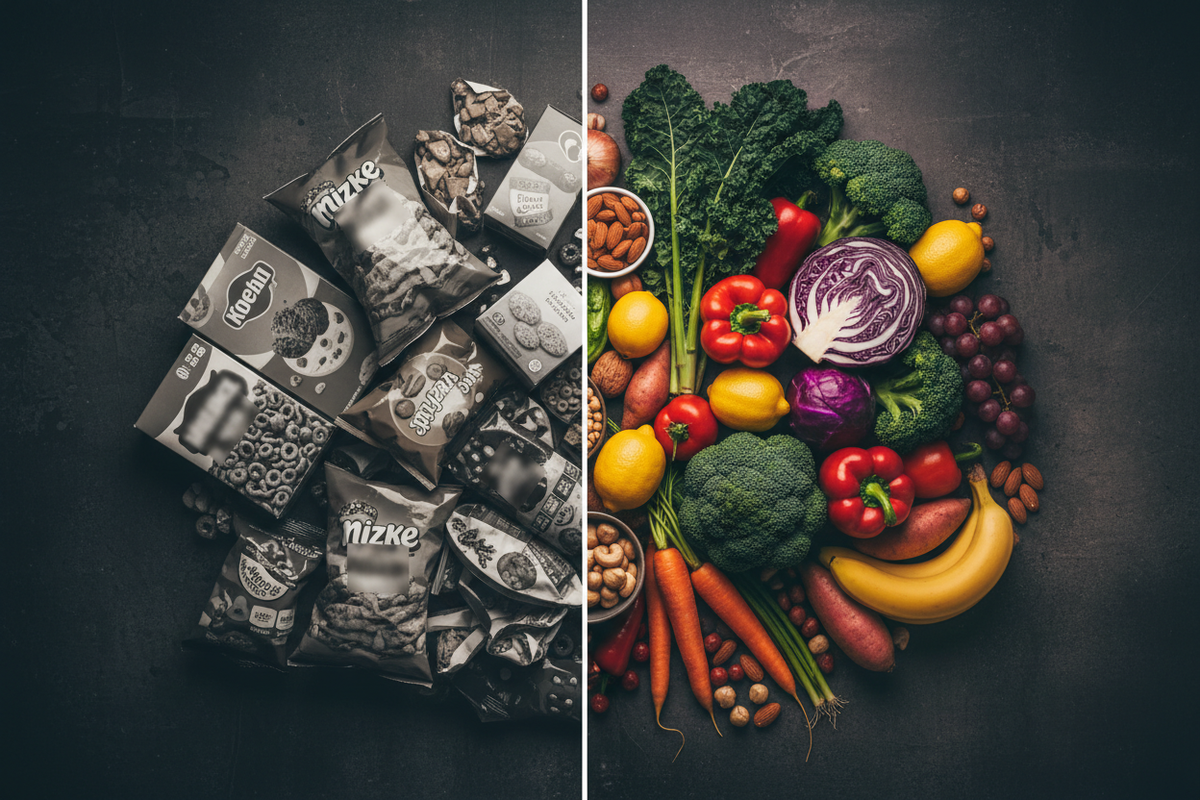
Cutting processed food for 30 days is one of those experiments that sounds dramatic but tends to produce results that surprise people. Not because the body does anything exotic, but because most people have been running on processed food long enough that they have forgotten what baseline actually feels like. Here is what the research and consistent reports from people who experimented suggest you can expect, roughly in the order things tend to happen.
The First Week: The Difficult Part
The first week is typically the hardest. Processed food is engineered for repeat consumption. High sugar and refined carbohydrates create blood glucose spikes followed by crashes that drive subsequent cravings. Hyperpalatable food combinations of fat, salt, and sugar stimulate dopamine pathways in ways that plain whole food does not. Cutting these foods out abruptly produces real withdrawal-like symptoms in many people.
Days one through four commonly involve headaches, irritability, cravings, and fatigue. These are partly withdrawal from the blood sugar rollercoaster, partly caffeine reduction if processed food also meant a lot of sugar-laden beverages, and partly the gut microbiome beginning to shift as its primary substrate changes. This phase is real and unpleasant enough that many people abandon the experiment here. Getting past it is the turning point.
Week Two: Stabilization
By the end of the second week, most people report that cravings begin to subside. Blood sugar regulation improves as the spikes-and-crashes cycle is broken. Meals of whole food, protein, fiber, and fat create slower, more sustained glucose release that the body responds to differently. Energy becomes more consistent through the day rather than cycling up after eating and then dropping.
Sleep often begins to improve during week two. One mechanism is reduced blood sugar volatility at night, which disturbs sleep less. Another is reduced inflammatory load, as sleep quality and inflammatory markers are linked. People who struggled with late-night energy dips followed by difficulty sleeping sometimes notice this pattern resolving.
Week Three: Gut Changes Become Apparent
The gut microbiome is sensitive to dietary composition and begins shifting within days of a significant diet change. By week three, many people report digestive changes including less bloating, more regular bowel movements, and reduced gas. The shift from a low-fiber processed food diet to one rich in plant fiber feeds different microbial populations. Fiber-fermenting bacteria that produce short-chain fatty acids increase. Species that thrive on simple sugar decrease.
Skin changes sometimes appear around week two to three. Processed food, particularly high-sugar food and dairy in some people, is associated with acne and skin inflammation through IGF-1 and insulin pathway activation. Reducing these inputs can produce noticeable skin improvements for people whose acne or congestion is diet-driven.
Week Four: The Metrics That Change
By the end of 30 days, research on similar dietary interventions shows consistent findings. Inflammatory markers (CRP, IL-6) drop measurably. Blood triglycerides decrease, often substantially. Fasting insulin and blood glucose improve. Blood pressure sometimes decreases. Liver enzyme levels can normalize in people who had mildly elevated values.
Weight change is highly variable and depends on what you replace processed food with. If you replace processed food with whole food at similar calorie intake, weight change is modest. If the removal of processed food naturally reduces caloric intake (which it often does, since whole food is more satiating per calorie), weight loss often follows without deliberate restriction.
Mental clarity is one of the most consistently reported subjective changes by week four. The brain operates on glucose, and steady glucose from whole food rather than spiked glucose from refined carbohydrates produces steadier cognitive function. Reduced neuroinflammation from lower dietary inflammatory load also likely contributes.
What You Are Actually Removing
Understanding what processed food contains explains why removing it produces these effects. Ultra-processed food typically contains refined carbohydrates and added sugar that spike blood glucose and drive insulin. Refined vegetable oils high in omega-6 fatty acids that promote inflammatory eicosanoid production. Sodium at levels that stress blood pressure regulation and mask the palatability of real food. Emulsifiers and artificial additives that disrupt gut barrier function and microbial balance. Absent nutrients: fiber, phytonutrients, and micronutrients are largely stripped in processing.
Replacing these with whole food adds fiber for the microbiome and blood sugar stability, polyphenols and antioxidants from plants, omega-3 fatty acids from fish and certain plants, magnesium, zinc, potassium, and other micronutrients typically deficient in processed food-heavy diets, and protein with complete amino acid profiles from meat, fish, legumes, and dairy.
What to Supplement During This Transition
Even a whole food diet can have gaps depending on individual food choices and restriction patterns. Vitamin D is the most common deficiency regardless of diet quality. Magnesium is commonly low in people who do not eat a lot of leafy greens, nuts, and seeds. Omega-3 fatty acids require regular fatty fish intake to be adequate from food alone. A quality daily supplement stack covering these bases supports the transition and helps you feel the dietary change more clearly.
Peremis Liver Support can be a useful addition during a dietary transition, supporting the liver's role in processing metabolic waste and improving bile production that aids fat digestion as you shift toward more whole food fats.
The Long View
Thirty days is enough to experience the initial shift. It is not enough to see the full long-term metabolic changes that researchers measure over six to twelve months of sustained dietary improvement. But for most people, 30 days is enough to recalibrate their baseline and experience what better energy, clearer thinking, and improved digestion actually feel like. At that point, going back to the previous pattern has a different quality to it. You have a comparison point.
Frequently Asked Questions
What counts as processed food?
The NOVA classification system categorizes food by degree of processing. Ultra-processed foods are the primary concern: ready-to-eat meals, packaged snacks, fast food, sugary beverages, breakfast cereals with added sugar, processed meats, commercial baked goods, and most items with five or more ingredients including additives and preservatives. Minimally processed foods (frozen vegetables, canned legumes, plain yogurt) are not the target of this type of experiment.
Will I lose weight cutting processed food?
Often, but it depends on what replaces it. Whole food is more satiating per calorie, so many people naturally consume fewer total calories without trying. Insulin and blood sugar improvements also support fat metabolism. Weight loss is common but not guaranteed without attention to overall caloric context.
How quickly does the gut microbiome change?
Research shows measurable shifts in gut microbial composition within three to five days of a significant dietary change. By two to four weeks, more substantial population changes are evident. The changes are most pronounced and durable when the new dietary pattern is maintained consistently over months.
Why do I feel worse before I feel better?
The first week withdrawal effects from blood sugar swings, dopamine downregulation from hyperpalatable food, and gut microbial die-off of sugar-dependent species all contribute to temporary worsening. This is a normal and expected part of the transition. Adequate hydration, protein intake, and sleep help minimize this phase.
This content is for informational purposes only. Dietary changes for specific health conditions should be made in consultation with a healthcare provider.