
How to Read a Supplement Label Without Getting Fooled
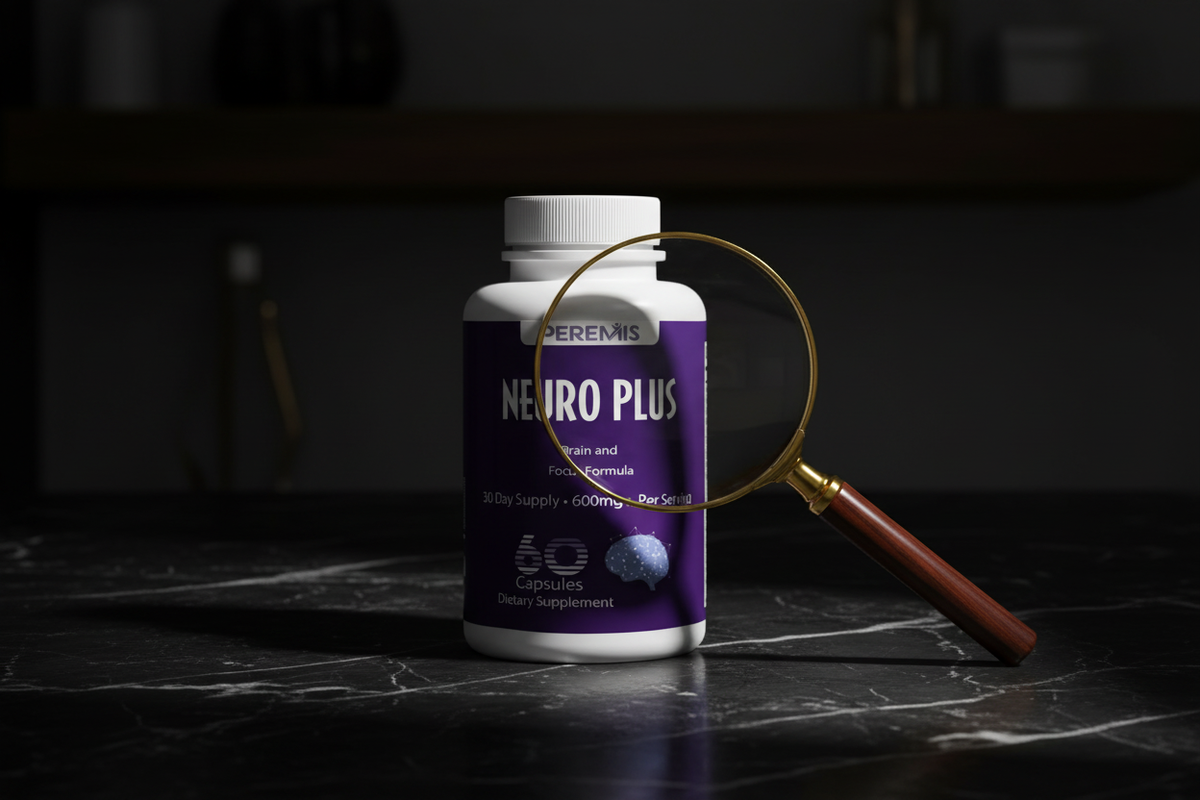
Last updated: 27 July 2026 · This is our hub guide. Each ingredient below has its own deep dive with the real numbers.
Supplement labels look scientific. They have long ingredient names, percentage daily values, and certification badges that suggest rigorous oversight. Most people trust them more than they should. Here is a practical guide to what actually matters on a supplement label and what is mostly noise.
The five checks, in order
- What is the serving size, and how many servings a day?
- Are individual ingredient amounts disclosed, or hidden in a blend?
- Is it a raw powder or a standardised extract, and at what percentage?
- Does the dose match what the research actually used?
- Who verified it, and will they show you the paperwork?
Start with the serving size
Everything on the label is expressed per serving. Before you compare products or evaluate a dose, check the serving size and how many servings are in the container. A product that appears cheaper may require two capsules per serving where another requires one. A 60 capsule bottle can be a 30 day supply or a 60 day supply, and the front of the box rarely makes that obvious.
Active ingredients versus other ingredients
The Supplement Facts panel separates active ingredients from other ingredients. The actives are the ones with claimed functions. The other ingredients section covers fillers, binders, capsule materials and flow agents. These are generally safe, but the length of that list tells you something about the manufacturing approach. A short list suggests a cleaner formulation.
What proprietary blends actually mean
A proprietary blend lists several ingredients under one name with a combined total weight, without disclosing how much of each is present. Protecting a formula from competitors is a legitimate reason to do it. It also makes it impossible for you to know whether any single ingredient is present at a meaningful dose.
If a blend contains 500 mg across ten ingredients, some of those are almost certainly at token amounts. The expensive ingredient might be 10 mg while cheaper material makes up the bulk. Under US rules the blend only has to list ingredients in descending order by weight and give one total. Look for fully disclosed labels where you can.
Extract ratios and standardisation
This is where most people get lost, and it is where most of the money is won or lost.
Herbs and mushrooms can be listed as raw powder or as an extract. An extract ratio such as 10:1 tells you how concentrated the extract is. Standardisation goes further by naming the percentage of a specific active compound, such as ashwagandha standardised to 5 percent withanolides.
Here is the part that matters. A percentage on its own means nothing until you multiply it by the milligrams. Five percent of 300 mg is 15 mg. Thirty five percent of 60 mg is 21 mg. The smaller capsule wins. Learn that one calculation and every shelf becomes comparable.
The same logic applies across ingredients, and the specifics differ enough that each deserves its own guide.
Deep dives by ingredient
- Magnesium: why a 1000 mg glycinate capsule contains about 141 mg of actual magnesium, and how to spot buffered bisglycinate cut with oxide.
- Turmeric: turmeric root is only 1 to 6 percent curcuminoids, so the biggest milligram number on the shelf is usually the weakest product.
- Ashwagandha: root versus leaf, why a withanolide test cannot detect leaf substitution, and the difference between whole root powder and standardised extract.
- Mushrooms: why polysaccharide is not beta glucan, and how much of a mycelium product is residual grain starch.
- Sleep supplements: what the trials actually dosed, and how long to give something before judging it.
Compare the dose against the research
Once you know what is in a product and how much, compare that against what studies actually used. If a supplement contains 50 mg of ashwagandha and the trials showing an effect used 300 to 600 mg, you are not taking the studied dose. Marketing copy referencing clinical studies is meaningless if the product does not match what was studied.
Watch for two moves here. Brands quote compound weight rather than active content. And brands quote absorption enhancement as though it were dose equivalence, which it is not. Better absorption of a small dose is still a small dose.
What the certification badges actually verify
cGMP means the facility follows FDA guidelines for quality manufacturing. It verifies the process, not the contents of the bottle.
NSF Certified for Sport and Informed Sport are higher bars. They verify the product was tested for banned substances and that what is on the label is in the bottle.
Third party testing by an independent lab is the most direct verification. A certificate of analysis confirms contents and screens for contaminants. Reputable brands share them on request.
Organic certification covers how the crop was grown. It does not test the finished product for heavy metals, which matters for ingredients like turmeric where lead contamination has been documented.
Where the product was made
FDA oversight of supplement manufacturing applies to facilities in the US, and cGMP certified US facilities generally represent higher baseline quality control. Note that "made in the USA" usually describes where the capsules were filled, not where the raw ingredient was grown. Those are different questions and only one of them is answered on most labels.
Expiry and storage
Supplements degrade, and some ingredients degrade quickly. Check the date. Probiotics and omega 3 oils are particularly sensitive to heat, light and time. Storage instructions exist for a reason and ignoring them can meaningfully reduce potency before you finish the bottle.
What a good label looks like
Fully disclosed ingredient amounts with no hidden blends. Extract ratios and standardisation percentages for herbal and mushroom ingredients. Doses that bear a relationship to the research. cGMP certification and ideally independent testing. A short other ingredients list. Clear manufacturing information and a company that answers questions about its formulation.
At Peremis, every product label discloses full ingredient amounts, and our manufacturing and testing standards are set out on our about page alongside our certifications. If you want to see test results for a specific batch, ask us and we will send them. More answers are on our FAQ page.
Frequently asked questions
What is the most important thing to check on a supplement label?
Individual ingredient amounts. If you cannot see how much of each active ingredient is present, you cannot judge whether it is dosed effectively. Proprietary blends that hide individual amounts are the clearest warning sign of underdosing.
What does a standardisation percentage actually tell me?
It tells you what proportion of the extract is the active compound, but only once you multiply it by the milligrams. Five percent of 300 mg gives 15 mg, while 35 percent of 60 mg gives 21 mg. The percentage alone is not comparable between products.
Are expensive supplements necessarily better?
Not always. Price reflects brand positioning and marketing spend as much as ingredient quality. The real questions are whether the actives are standardised, properly dosed against research, and independently verified. A cheaper product meeting those criteria beats an expensive one that does not.
What does natural mean on a supplement label?
Very little. The FDA has no formal definition of natural for supplements, so it is primarily a marketing term. The same applies to pure and clean. Focus on disclosed amounts, standardisation and testing instead.
Does organic certification mean it is free of heavy metals?
No. Organic certification covers how the crop was grown, not what the finished product contains. Heavy metal screening requires separate testing of the finished batch, which matters most for root ingredients such as turmeric.
How do I know if a supplement has been third party tested?
Look for NSF, Informed Sport, UL or ConsumerLab marks, or ask the manufacturer directly for a certificate of analysis from an independent lab. A brand that has one will send it without hesitation. A brand that deflects has told you something.
Why do supplements say not evaluated by the FDA?
Because the FDA does not approve dietary supplements before sale the way it approves medicines. Manufacturers are responsible for safety and label accuracy. The disclaimer is legally required on every supplement, so it is not a mark of poor quality, but it is exactly why independent testing matters.
The bottom line
Reading a label properly takes about thirty seconds once you know the five checks. Serving size, disclosed amounts, standardisation, dose against research, and who verified it.
Go and pick up whatever is in your cupboard right now and run it through them. Most people find at least one product they would not buy again.
This article is for educational purposes only. Always consult your healthcare provider before starting any new supplement.